Bench note · 1 October 2026
How to Read TPI on a Pull Saw
Teeth per inch tells you how fast and how smooth a saw cuts. A ryoba gives you two answers on one blade.
Count the teeth in one inch
TPI stands for teeth per inch. Lay a rule along the blade and count the points in one inch. Six teeth is coarse. Eighteen is fine.
The drawing shows one inch of each pattern we make, at the same scale. Bigger teeth take a bigger bite and leave a rougher face.
- 6 TPICoarse
- 10 TPICoarse
- 12 TPIMedium
- 14 TPIMedium
- 17 TPIFine
- 18 TPIFine
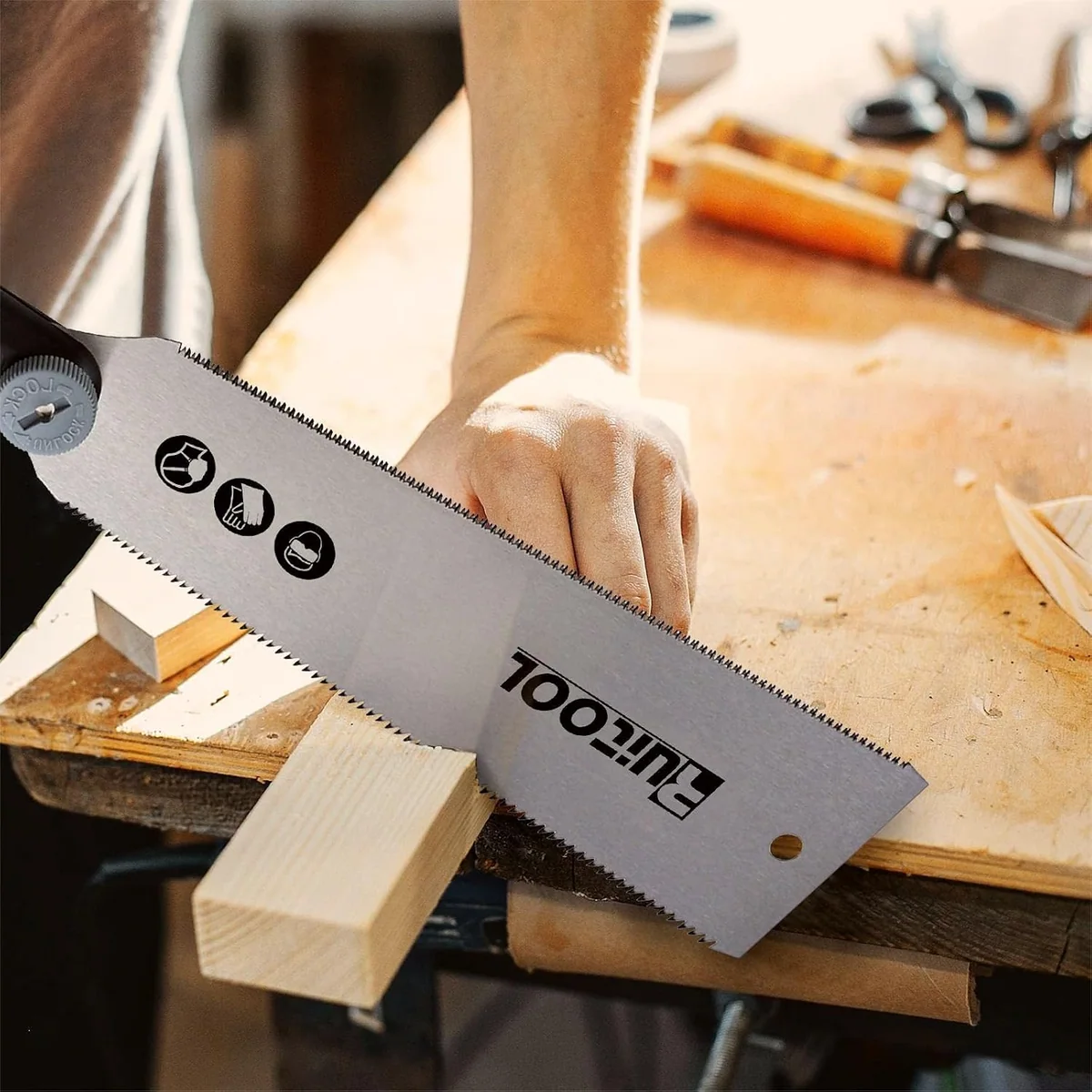
Two edges on a ryoba
A ryoba saw has teeth on both edges. One edge is coarser and one is finer. On our 6 in saw the edges are 14 and 17 TPI. On the 10 in saw they are 6 to 10 TPI and 18 TPI.
Use the coarser edge along the grain and in softwood. Use the finer edge across the grain, in hardwood, and wherever the cut face will show.
| Saw | Blade | TPI | From |
|---|---|---|---|
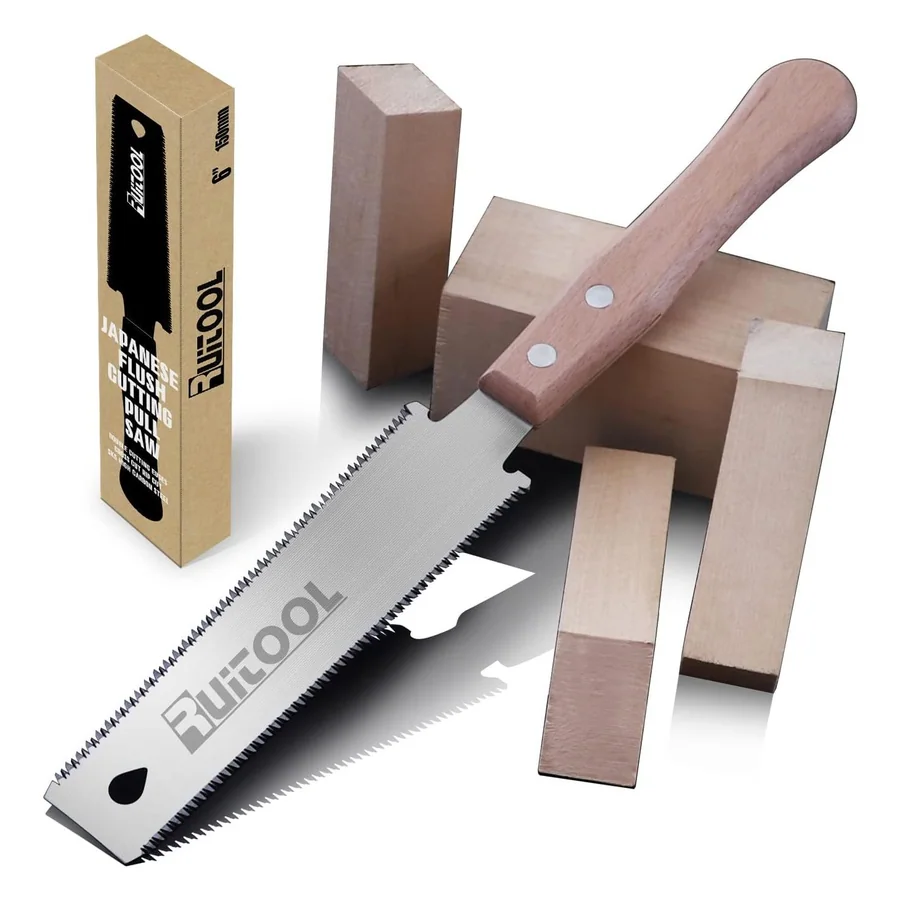
| RUITOOL 6 Inch Ryoba Saw | 6 in, SK5 high-carbon steel | 14 / 17 | $14.99 |
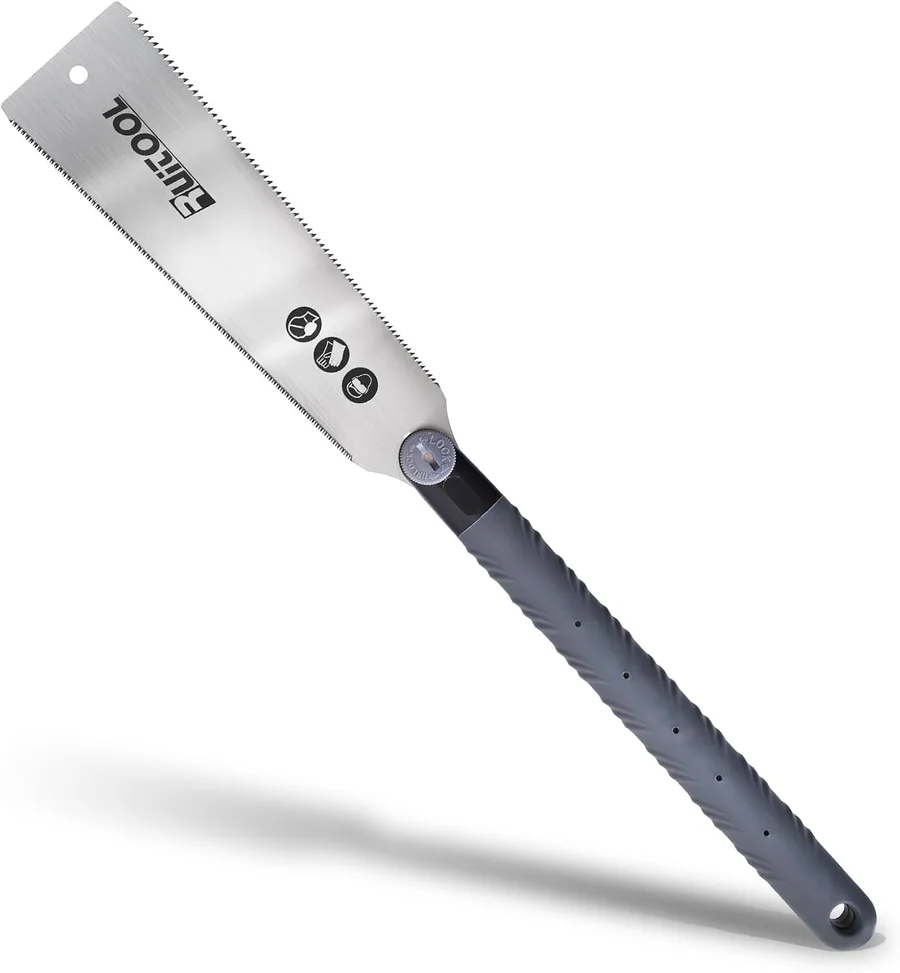
| RUITOOL 10 Inch Ryoba Saw | 10 in, SK5 steel with hardened teeth | 6-10 / 18 | $21.59 |
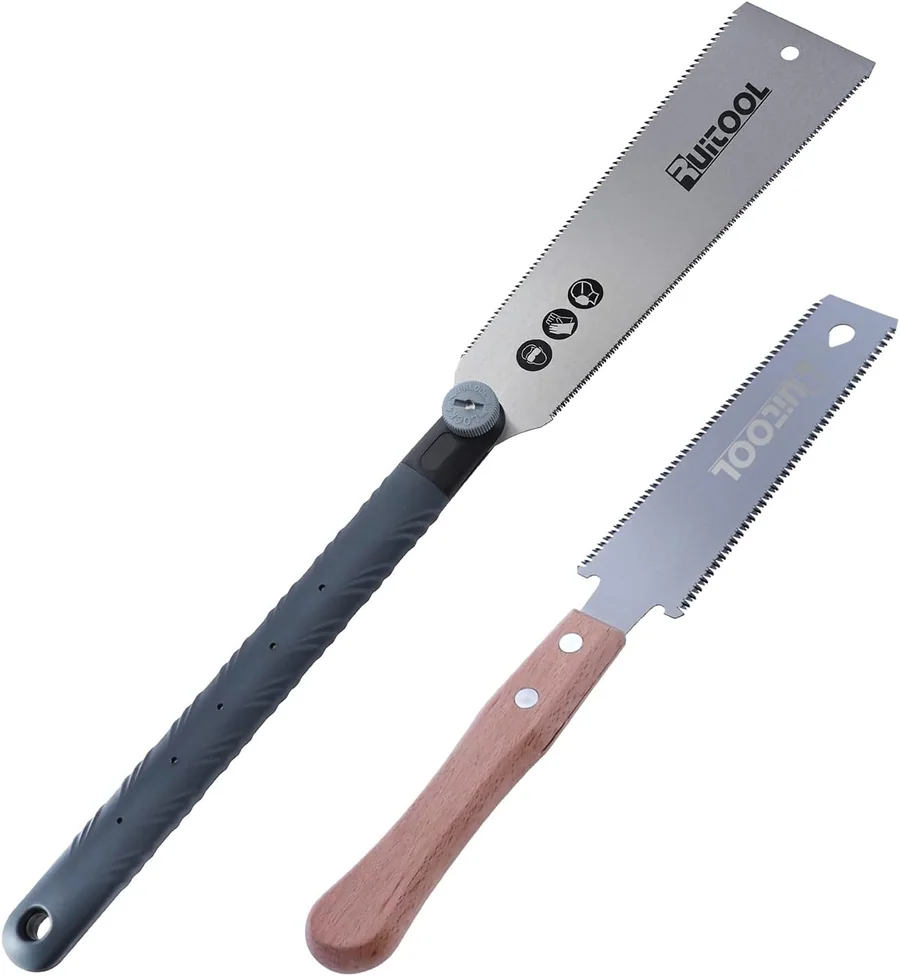
| RUITOOL Ryoba Saw Set | SK5 high-carbon steel | 10 / 14 / 17 / 18 | $33.99 |
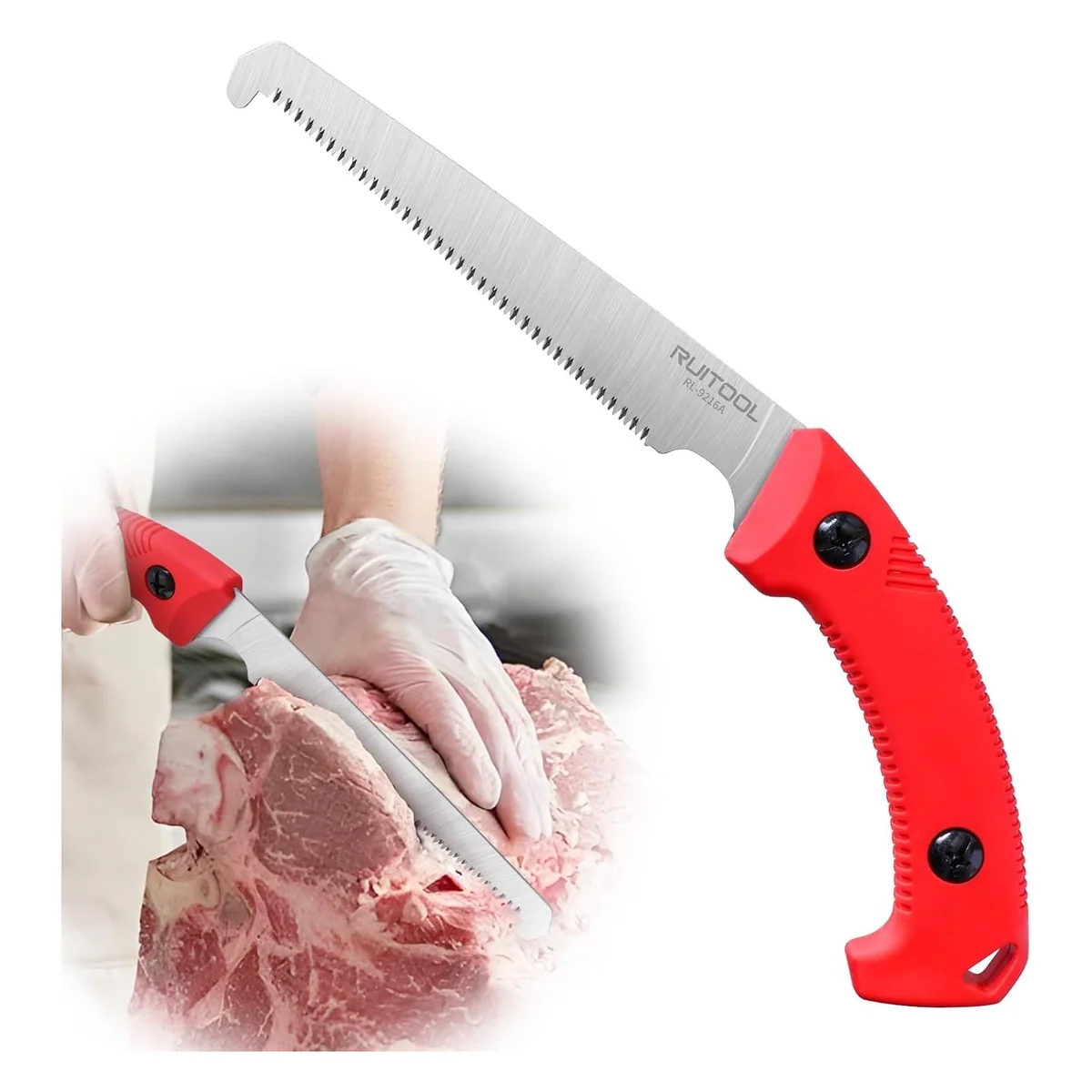
| RUITOOL Meat & Bone Saw | 7 in, high-carbon steel, triple-ground teeth | 12 | $26.99 |
Let the pull do the work
A pull saw cuts as you draw it back. The blade is thin, so pushing hard only bends it. Start with a light stroke at a low angle, then lengthen the stroke.
The table lists every RUITOOL saw with its blade length and teeth.
When coarse is right
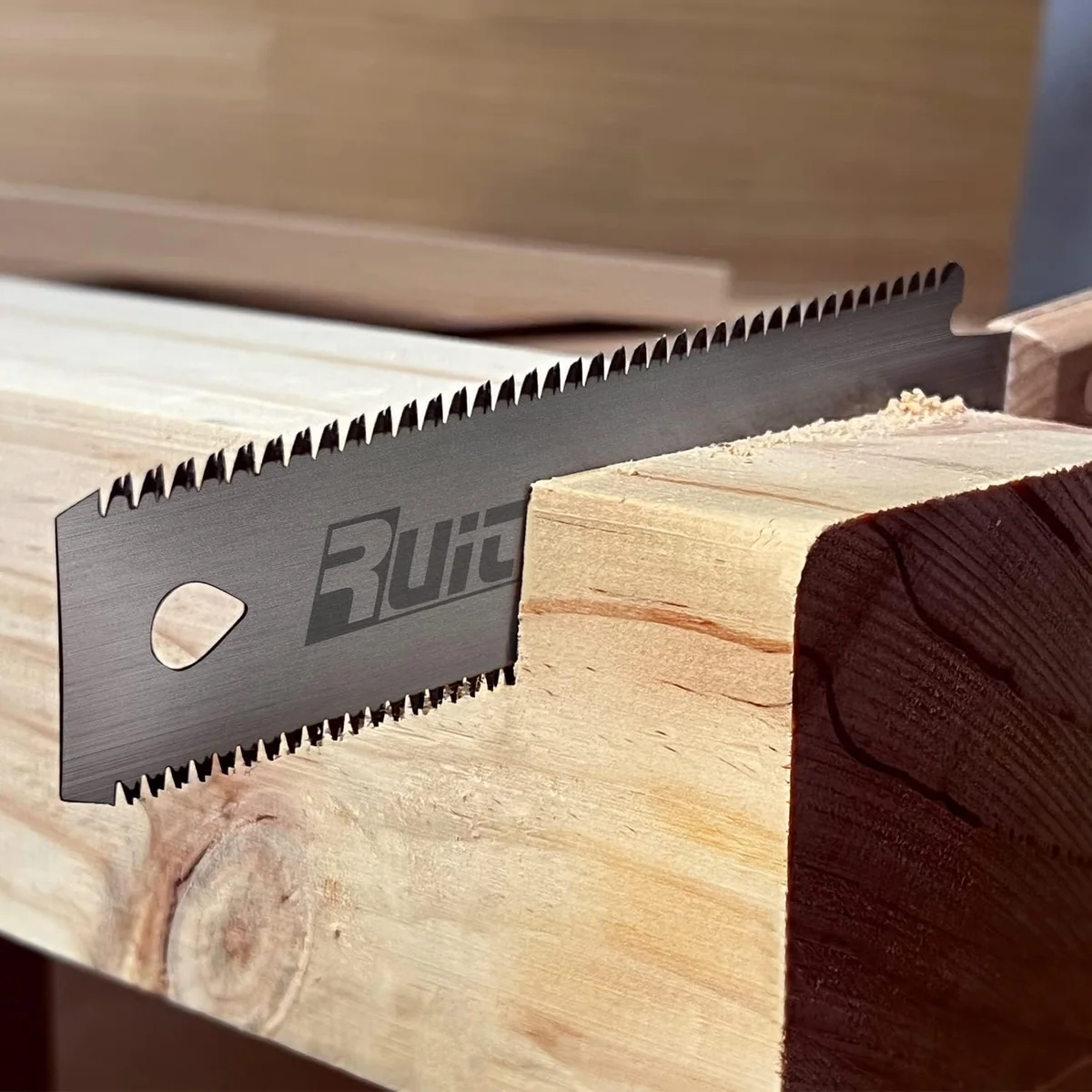
Fine teeth clog in a thick rip cut. For boards, start on the graduated edge of the 10 in saw. Its teeth run from 10 per inch near the handle to 6 per inch at the tip.
Our meat and bone saw has 12 TPI for another reason. Bone needs a tooth that bites without skating.